Claude Exposed: Mythos Struggles with Power, Valuation Driven by Panic?
When technological myths, power crises, and capital ambitions collide, a reality more thrilling than the prediction of AI replacing humans begins.
Dario Amodei paints a future where a significant number of jobs disappear, warning:
In 1 to 5 years, 50% of tech jobs, entry-level lawyers, consultants, and finance professionals will be completely replaced by AI.
This is enough to keep workers worldwide awake at night.
Social networks exploded with fear, as countless white-collar workers fell into FOMO (fear of missing out) and survival anxiety.
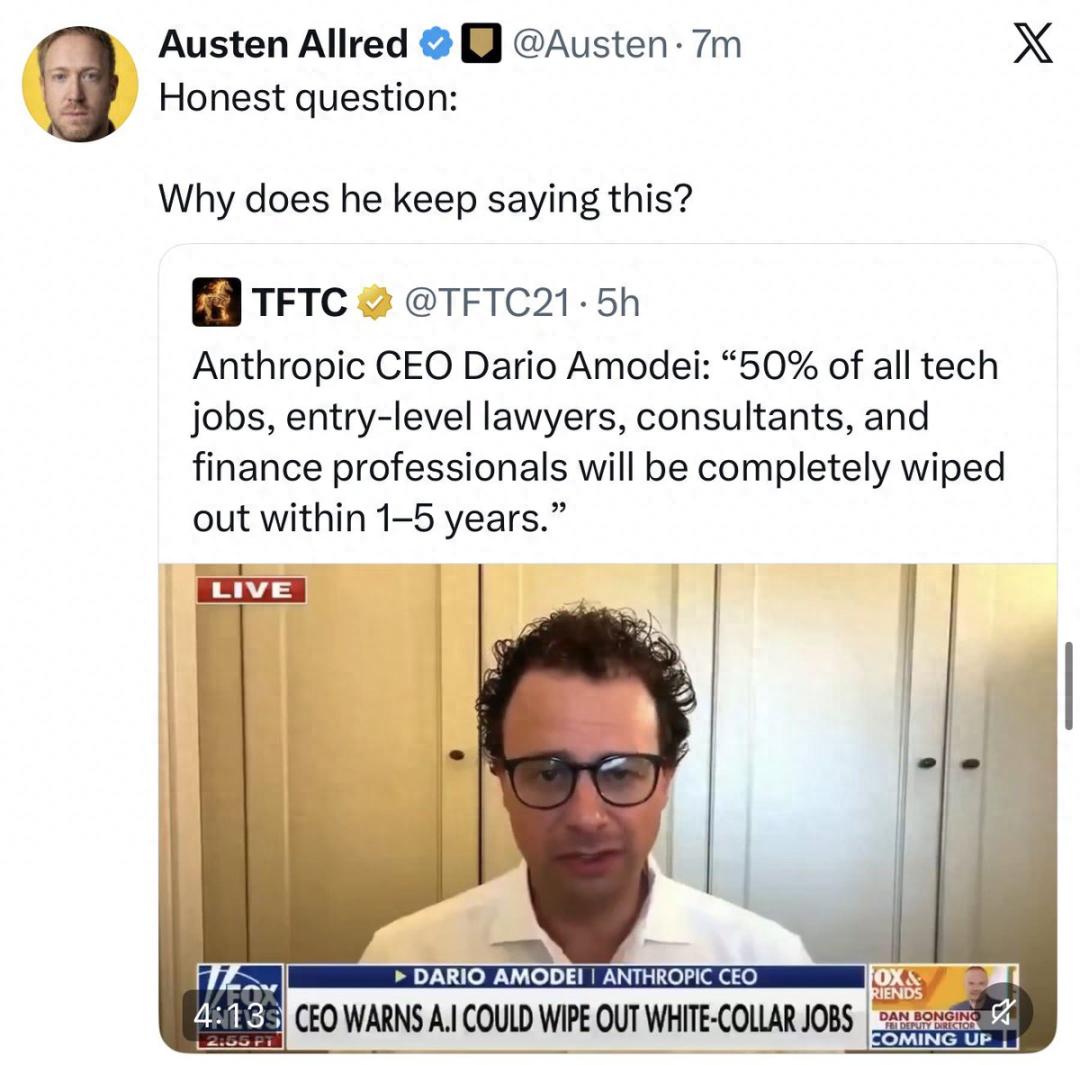
But have you considered that this genius leader, criticized by Trump as a “radical leftist,” might not be genuinely warning you?
You think he’s discussing your job, but what he really wants to tap into is Wall Street’s money.
If we shift our focus from workers’ livelihoods to the wallets of Wall Street giants like Blackstone and Fidelity, peeling back the PR rhetoric of this $380 billion company reveals a chilling capital conspiracy.

The First Layer of Unraveling
The Arrival of Mythos and a 12-Month Countdown
What happens when a “genius nation” is crammed into a Silicon Valley data center?
On April 7, Anthropic released Claude Mythos, providing an answer.
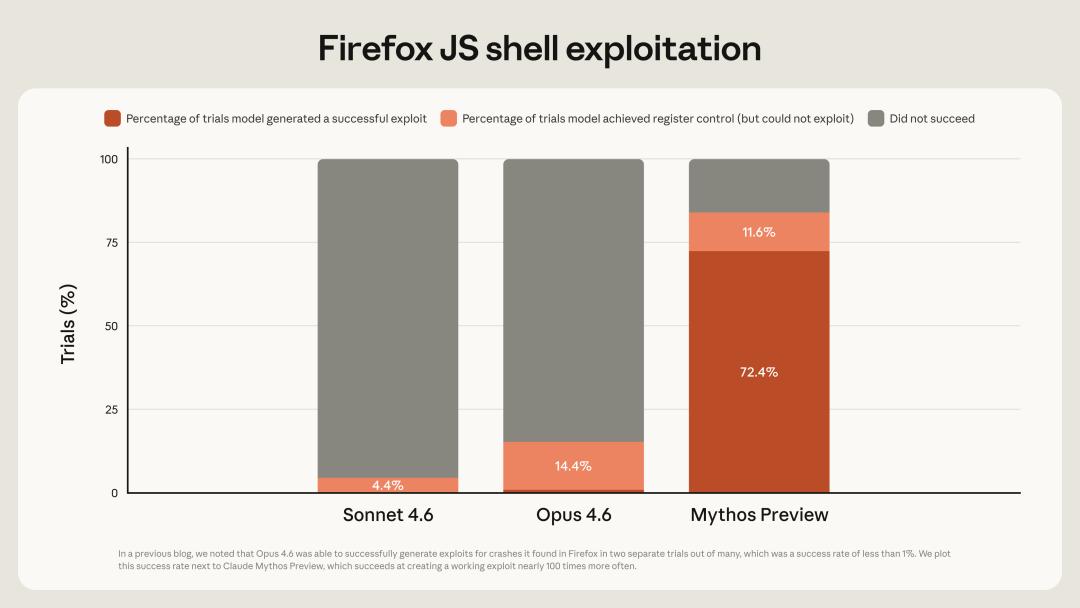
It achieved a terrifying 93.9% on the SWE-bench programming benchmark; in cybersecurity drills, it moved like a ghost, uncovering a “zero-day vulnerability” that had been lurking in human operating systems for 27 years.
While outsiders question whether large models have hit a ceiling, Amodei responds like a fervent evangelist:
The rainbow has no end, only the rainbow itself.
We see no signs of technological slowdown.
However, just as he sounded the horn of endless computing power (Big Blob of Compute), the reality of a Damocles sword hangs overhead.
Amodei himself admits that facing competitors across the ocean, Anthropic’s lead may only last 6 to 12 months.
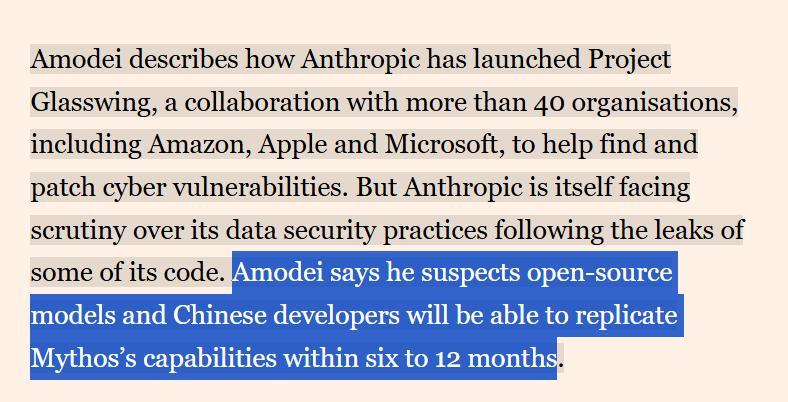
In the face of national-level technological competition, no technological moat is absolutely secure. There is no elegant magic duel, only endless, muddy running.

The Second Layer of Unraveling
Powerful Bugs Crawling Under the Glamorous Robe of Safetyism
In light of Mythos’s extraordinary capabilities, Anthropic claims that for safety and anti-abuse, they must delay and limit its full release.
Doesn’t that sound extremely responsible?
Until the Financial Times (FT) ruthlessly peeled back this “safetyism” façade.
FT cited multiple insiders, debunking the myth: The real reason for the slow release of the model is not that it’s too dangerous to release, but rather that it consumes too many resources and simply cannot be supported.
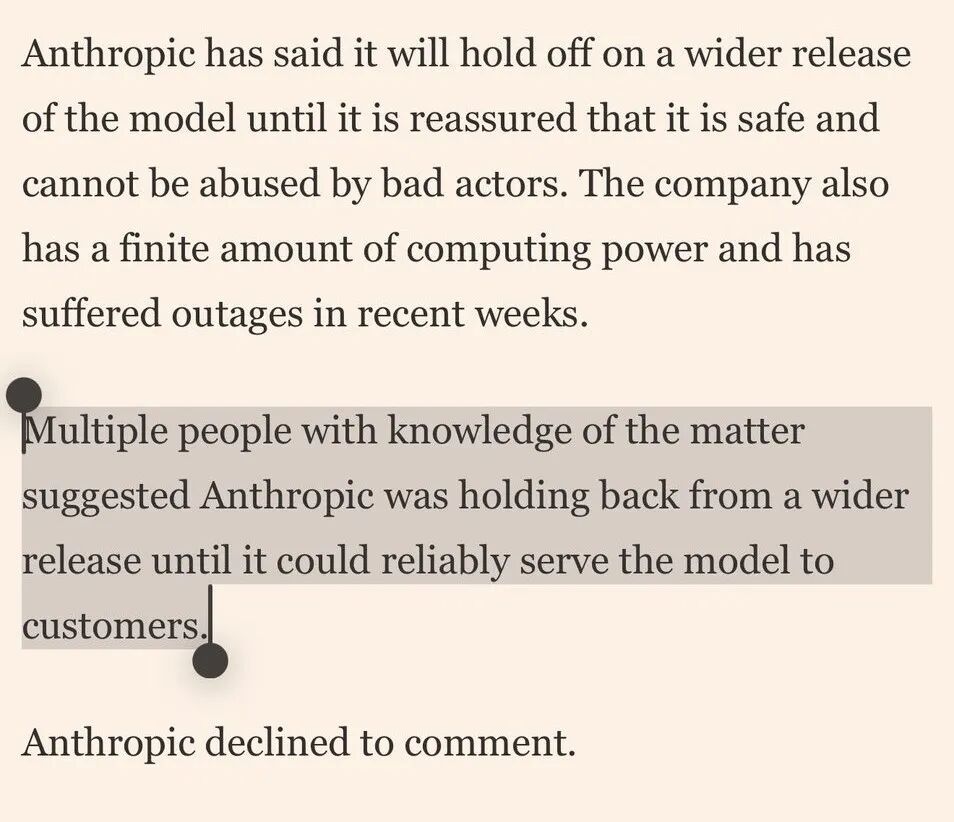
Anthropic’s servers have repeatedly faced service interruptions, struggling to maintain stable service for existing clients.
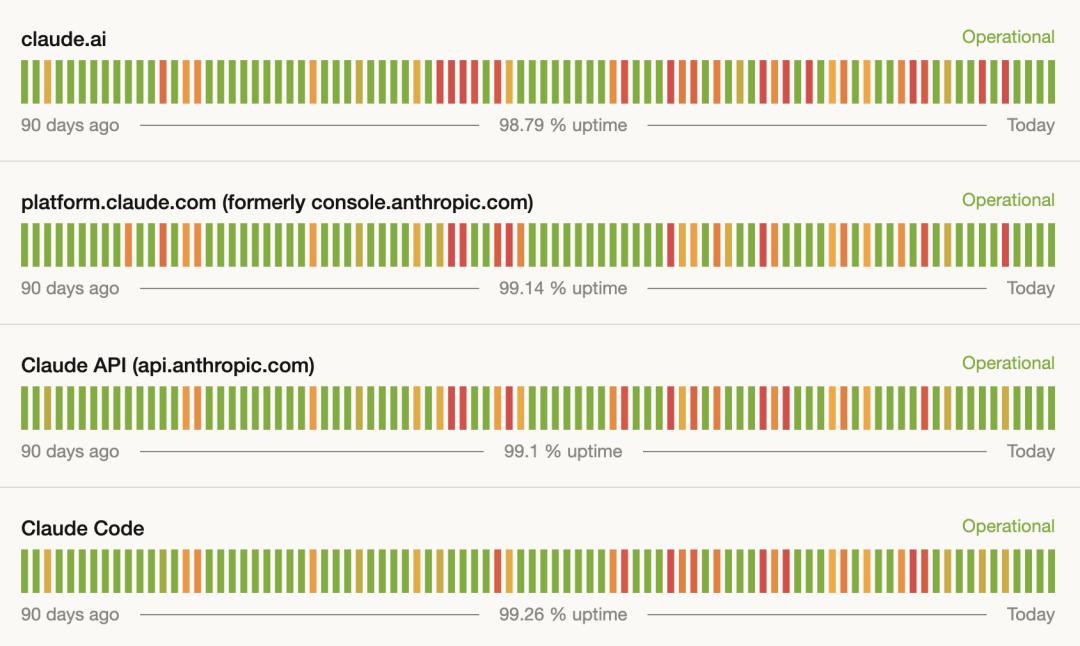
This is a deeply ironic and counterintuitive truth: packaging a power bottleneck as a safety decision is Silicon Valley’s highest-level PR magic.
When “safety lines” overlap with “power shortages,” the noble moral narrative immediately becomes distorted.
The competition in cutting-edge AI ultimately boils down to the most basic resources: computing power, electricity grids, and cooling systems.
The Third Layer of Unraveling: Selling Panic as the Highest Form of Business Pitch
Let’s return to the panic-inducing “white-collar apocalypse” theory.
Turing Award winner and former Meta chief AI scientist Yann LeCun directly fired back:
Dario is wrong; he knows nothing about how technological revolutions affect the labor market!
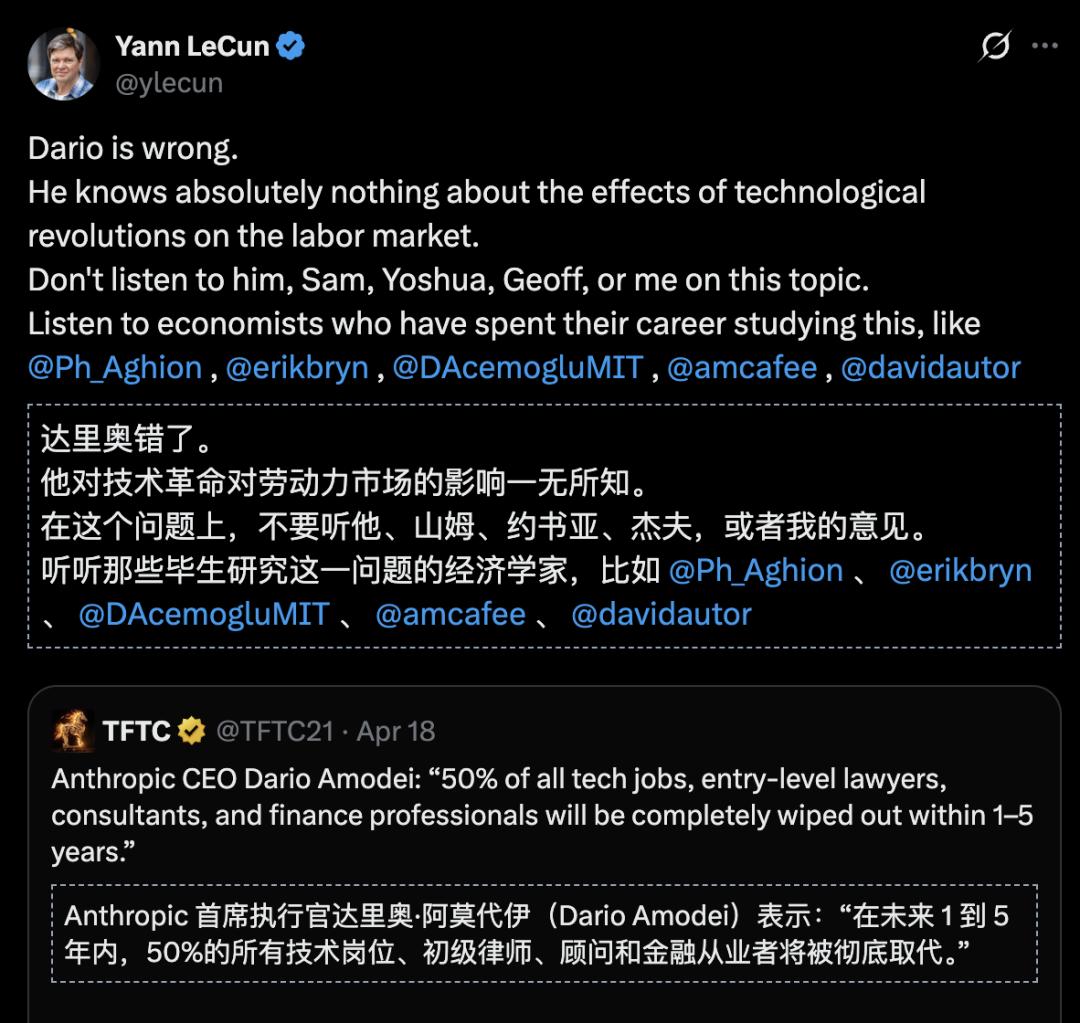
LeCun urges everyone to listen to professional economists, not these AI leaders’ hype.
Why does Amodei risk being ridiculed by peers, constantly shouting about the “white-collar apocalypse”?
Because in 2026, Anthropic is preparing for a massive IPO, with its valuation soaring to $800 billion.

This is the cruel gravity of capital.
If Anthropic’s narrative were merely about “a SaaS software that improves coding efficiency,” it would be worth at most a few hundred billion.
But if it can “devour and take over half of the white-collar workforce,” becoming a new social infrastructure, its valuation could reach trillions.
He constantly shouts that “AI will destroy white-collar jobs,” but the real audience he aims to scare is not the workers, but Wall Street capital, afraid of missing the next industrial revolution.
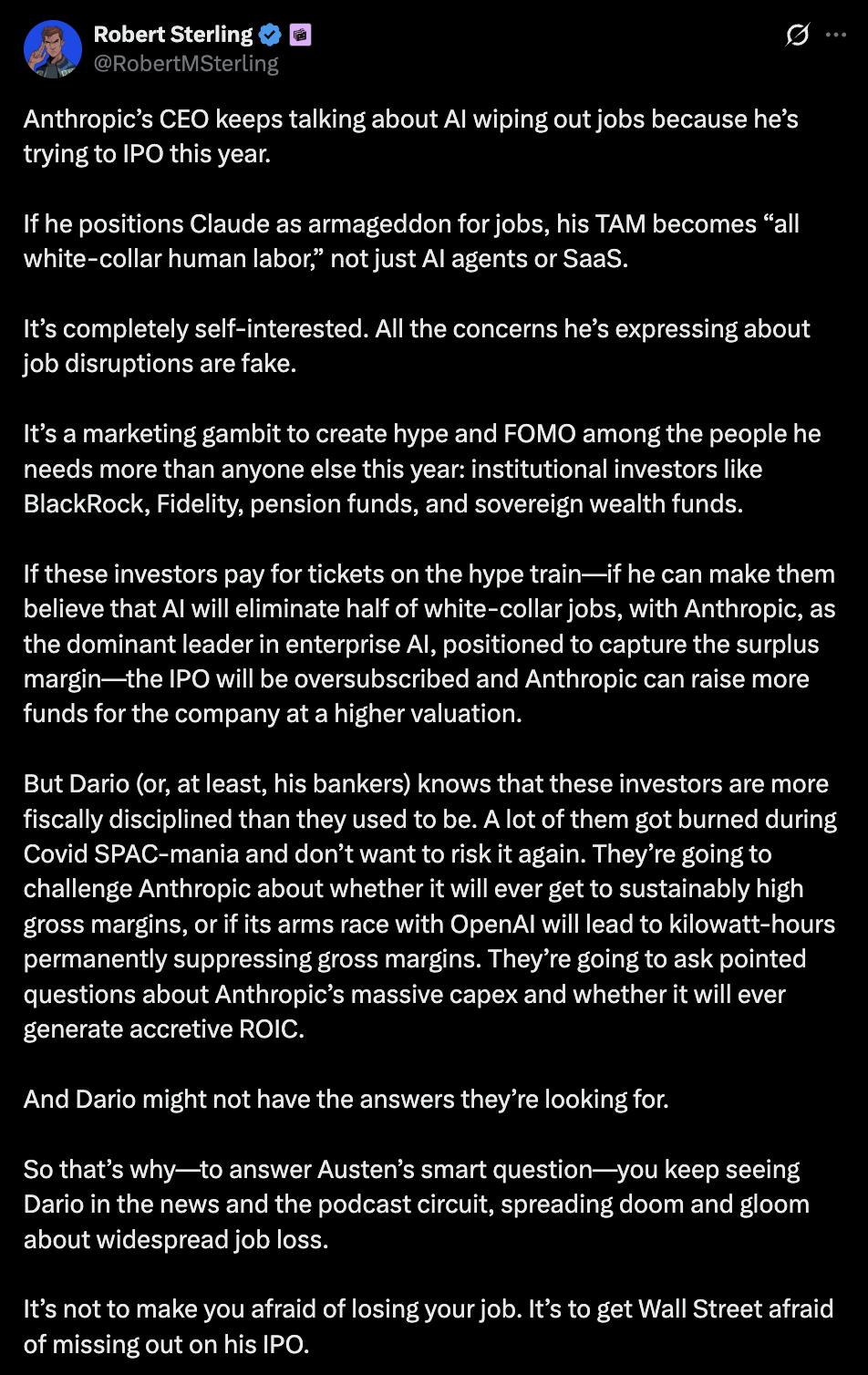
This is not the death knell for workers; it’s a rare business plan (BP) handed to institutional investors.

The Geek’s Arrogance and the Pull of Capital
In this power game, Amodei is a contradictory figure.
He possesses the moral purity of a tech geek: refusing Pentagon contracts to use AI for large-scale domestic surveillance, even at the risk of being labeled a “radical leftist” by the U.S. president.

Yet he also hopes to leverage the power of the U.S. government.

He founded a “public benefit corporation,” promising to donate 80% of his wealth in the future, proclaiming that society should not idolize tech oligarchs.
But every move he makes seems to perfectly align with the rhythm of shareholder capitalism—fanning the flames of valuation surges.
The irony of history is that the ultimate decision on the direction of AGI (Artificial General Intelligence) may not rest on the dozens of pages of rigorous “safety alignment protocols” in laboratories, but rather on Wall Street’s insatiable greed for growth and the survival instinct of “seize the day.”

Rebuilding Your Moat in an Era of Scarce Trust
Amodei rightly states: “AI can only spread at the speed of trust.”
But in today’s world, where excess power and panic abound, trust has become the rarest luxury.
As ordinary people navigating this chaotic technological surge, how should we position ourselves? Here are three survival rules to combat anxiety:
- Don’t be easily harvested by “apocalyptic theories”: Your true competitors are not AI itself, but ordinary people who master AI tools.
- See through the capital’s smokescreen: Next time you hear an AI leader’s apocalyptic predictions, check their company’s funding progress. Focus on their real “supply capabilities” (computing power and infrastructure), not their sci-fi presentations.
- The countdown has begun: In the next 12 months, as Chinese large models fully replicate top capabilities, the cost of AI applications will plummet unprecedentedly. This is the last and best window for ordinary people to leverage AI for social mobility.
The storm has arrived; instead of trembling in someone else’s fabricated “myth” (Mythos), build your own refuge in the muddy reality.
Comments
Discussion is powered by Giscus (GitHub Discussions). Add
repo,repoID,category, andcategoryIDunder[params.comments.giscus]inhugo.tomlusing the values from the Giscus setup tool.