Can Xiaohongshu Become a Tech Community with a Human Touch?
No one can escape the wave of AI, and community apps are no exception.
Compared to platforms like Doubao and Qianwen, which are backed by large companies capable of creating consumer-facing entry points, community apps seem to have inherent shortcomings. Historically, they appear to only achieve a geeky presence by closely aligning with technology content, ultimately facing the reality of reaching a plateau in user growth within niche categories.
What if it were a general community? In past niche operations, rapidly introducing KOLs (Key Opinion Leaders) and KOCs (Key Opinion Consumers) has been a common method to quickly solve industry coverage issues. However, this approach may lead to a clash of old and new residents, especially in technology, which remains a high-threshold niche. Without a sense of gain, new users’ lifecycles may shorten quickly.
Today, Xiaohongshu (Little Red Book) may serve as a good case study. It is active enough, and the TikTok refugee incident somewhat confirms this community’s certain inclusivity across races and cultures. Since last year, Xiaohongshu’s core proposition has been to build an interest-based community, with ambitions for expansion. Technology has become one of the fastest-growing content categories, with tech content publication on Xiaohongshu increasing by over 100% year-on-year and the creator scale growing by over 200%.
More importantly, a truly popular tech community has yet to emerge in the Chinese-speaking world; existing platforms are either too hardcore or diluted. In contrast, platforms like X (formerly Twitter) have proven that a UGC platform can grow into one of the most active and real-time hubs for global tech content. X even created a Musk effect, where anyone praised by Musk would gain instant popularity. In March of this year, Musk called Kimi’s work “Impressive,” causing a stir in the tech circle.
As China’s most active community platform, Xiaohongshu harbors this ambition. The head of Xiaohongshu’s tech operations, Sanbing, mentioned that one of their broad goals is to become the best tech community.
However, they also want to be unique. Sanbing told media outlets like 36Kr that in their operational strategy for the tech category, Xiaohongshu will not focus on news and tutorials but would rather act as a “connector between people.”
To understand this somewhat abstract term, we can look at a recent hackathon hosted by Xiaohongshu. At this event, many young tech entrepreneurs were present—exactly the type of individuals Xiaohongshu aims to attract in its tech category operations. They discussed the strategies and changes in Xiaohongshu’s tech category operations over the past year.
 Xiaohongshu Hackathon Peak Competition Scene
Build in Public
“Before creating a product, we first post the idea on Xiaohongshu to verify whether there is a demand.”
At the hackathon in Shanghai, a participant shared this sentiment. The hackathon is an old tradition in the programming world, but it was Xiaohongshu’s first time hosting one. This hackathon required participants to complete a product from idea to implementation within 48 hours, collaborating in a closed team environment, whether it be hardware or software.
The participant, Liu Xiaoben, unfortunately, did not make it to the finals with their project called “Mozao,” which aims to welcome the vibe coding (AI-assisted programming) era. Since voice input for vibe coding is three times faster than keyboard input, they designed Mozao—a black mask that allows free voice communication in public spaces without disturbing others.
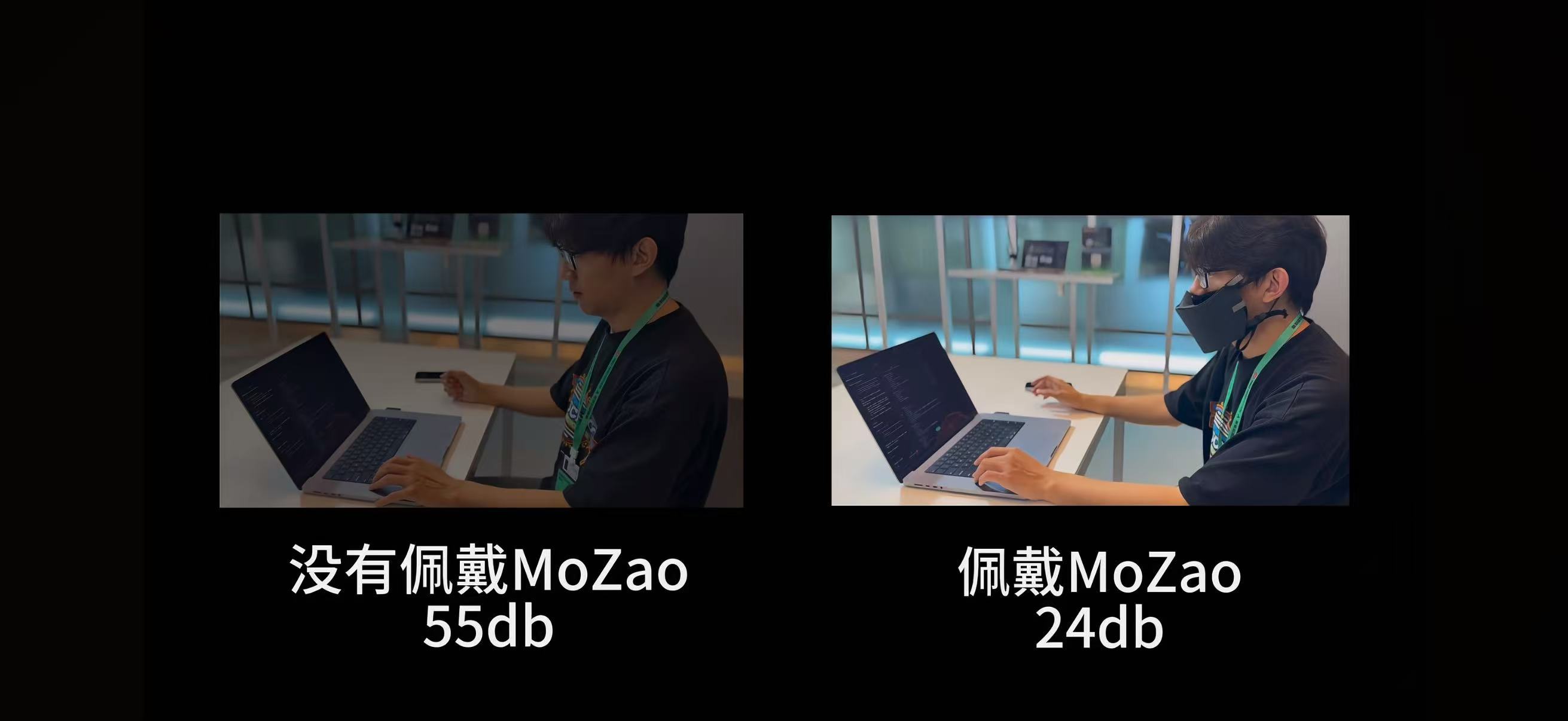 Liu Xiaoben with Mozao
Originally intended for outdoor use, Liu Xiaoben made an unexpected discovery after uploading a product video on Xiaohongshu. Users commented, “I really want to buy one for my roommate; he plays Genshin Impact too loudly and disturbs my sleep.” Another programmer remarked that this product is suitable for use in work areas, as many programmers prefer voice input.
This is what Liu Xiaoben referred to as validating demand. In a way, they are the type of entrepreneurs that align with Xiaohongshu’s “Build in Public” ethos, where the creation, validation, and iteration of products involve co-creation with Xiaohongshu users. In reality, Liu Xiaoben has his own Xiaohongshu IP and actively shares various creative ideas on the platform, such as asking, “How much would you pay to preserve your thoughts?” He now runs a startup focused on consciousness uploading technology, sharing the entire process from idea to birth on Xiaohongshu.
The concept of “Build in Public” was repeatedly emphasized during the hackathon, which is not coincidental. It relates to the shift in Xiaohongshu’s tech category operational strategy.
In the second half of last year, an AMA (Ask Me Anything) spontaneously gained popularity on Xiaohongshu. This activity, originating from foreign social platforms, is characterized by real-person Q&A sessions and has gained fame overseas for its brevity and efficiency. On Xiaohongshu, Xu Huazhe, an assistant professor at Tsinghua University’s Institute of Interdisciplinary Information Studies, initiated it, and the AMA trend quickly swept the tech circle in the Chinese-speaking world, attracting AI figures like Li Kaifu and Yin Qi, as well as celebrities from various fields like Mo Yan and Li Yinhe.
For Xiaohongshu’s community tech content operations, this was a significant milestone. Before the AMA’s rise, Xiaohongshu had held an independent developer competition in the first half of 2025, focusing more on the projects themselves and catering to a geek audience, giving independent developers a chance to showcase their work. However, for users who are not professionals or tech enthusiasts, discovering and participating in these discussions was not easy.
The AMA format is clever; you may not understand AI, but you have certainly heard of Li Kaifu. Whether genuinely curious or just a bystander, the presence of tech giants on Xiaohongshu has helped spread the word that Xiaohongshu can be related to technology, allowing industry professionals to publish content and followers to find like-minded individuals.
As Sanbing stated, the main strategy for Xiaohongshu’s tech category operations in 2025 is to “create a social circle for tech enthusiasts,” and to this end, they have continuously introduced influential KOLs from academia and business.
However, by 2026, the operational strategy for the tech category has changed. “After completing the introduction phase, we found that many people on Xiaohongshu are building in public. Entrepreneurs are posting products, and investors are looking for projects on Xiaohongshu. Therefore, in 2026, we are positioning ourselves as ‘connectors for people,’ linking the needs of small circles with the demands of the general public,” Sanbing said.
In simple terms, Xiaohongshu aims to allow tech entrepreneurs to find demand, create products, secure funding, and even sell their products all within the community, creating a closed-loop possibility.
This is why last year was the independent developer competition, and this year is the hackathon peak competition—because strategies are changing, and people have become the focal point. Sanbing mentioned that entrepreneurial projects change rapidly; a year later, styles can be drastically different, and chasing projects would be too late. “Compared to last year, which focused on projects, this year we believe the more cutting-edge aspect lies in people themselves, and the hackathon is inherently filled with unpredictable content, maximizing creativity and personal expression.”
Given Xiaohongshu’s current user base, it cannot solely operate like Jike, a niche discussion forum. The underlying logic is inherently contradictory; small circles imply precise and efficient interactions, while larger circles bring more attention but dilute content depth. More importantly, people may not necessarily need a second Jike.
For Xiaohongshu, retaining this group of tech enthusiasts requires careful consideration of the greatest common denominator—how to adapt tech content to fit the foundation of a general community—ensuring that tech entrepreneurs find value here while ordinary users find the content useful, allowing the flywheel to ultimately turn.
Can Xiaohongshu Create the Right Environment?
A natural logic is that to create something useful for users, content communities often take the shortcut of providing news and tutorials. However, Xiaohongshu has rejected this from the start.
Sanbing stated that the team made a clear choice early on in their content strategy for the tech category, opting not to focus on news and tutorials. The reason is that news is too strong in its informational nature, while tutorials often lead to motivations centered around selling courses, creating FOMO anxiety.
We see that Xiaohongshu has chosen to occupy a niche that combines the entrepreneurial processes of tech entrepreneurs with ordinary individuals. People’s needs are recognized in the early stages, their opinions are considered in the mid-term, and their purchasing power determines whether business can take off. People are involved throughout the process, allowing entrepreneurs to gain attention and commercial value.
When asked about Xiaohongshu’s value to him as a tech entrepreneur, Liu Xiaoben stated, “If I were to talk about Xiaohongshu’s advantages in tech content, I believe it has a strong sense of human connection.” This is a well-trodden perspective, but Liu Xiaoben added an interesting point: “The essence of business is interacting with real people, ultimately serving people. Currently, all real interaction can be facilitated through Xiaohongshu.”
The entrepreneurial experience of hackathon participant Sun Donglai is another case in point. Initially, Sun Donglai simply posted a survey on Xiaohongshu asking, “Do you record your dreams?” Without any promotion, it unexpectedly garnered 200,000 views. Comments ranged from users saying they write 800 words about their dreams daily to others who, unable to find suitable tools, directly opened an author account on Fanqie Novel to serialize their dreams.
Sun Donglai quickly realized that this was a vast and overlooked demand. On January 21, 2025, he launched Dreamoo on the Apple Store. Within a month, he had 3,000 users without any promotion, and now it has stabilized at over 4,000 users.
For early-stage entrepreneurs, this traffic and user feedback allow projects to gain visibility and reduce trial-and-error costs, which are invaluable. During the finals, investor Cao Xi humorously asked, “So do young people no longer need to seek VC funding?” This elicited laughter from the audience.
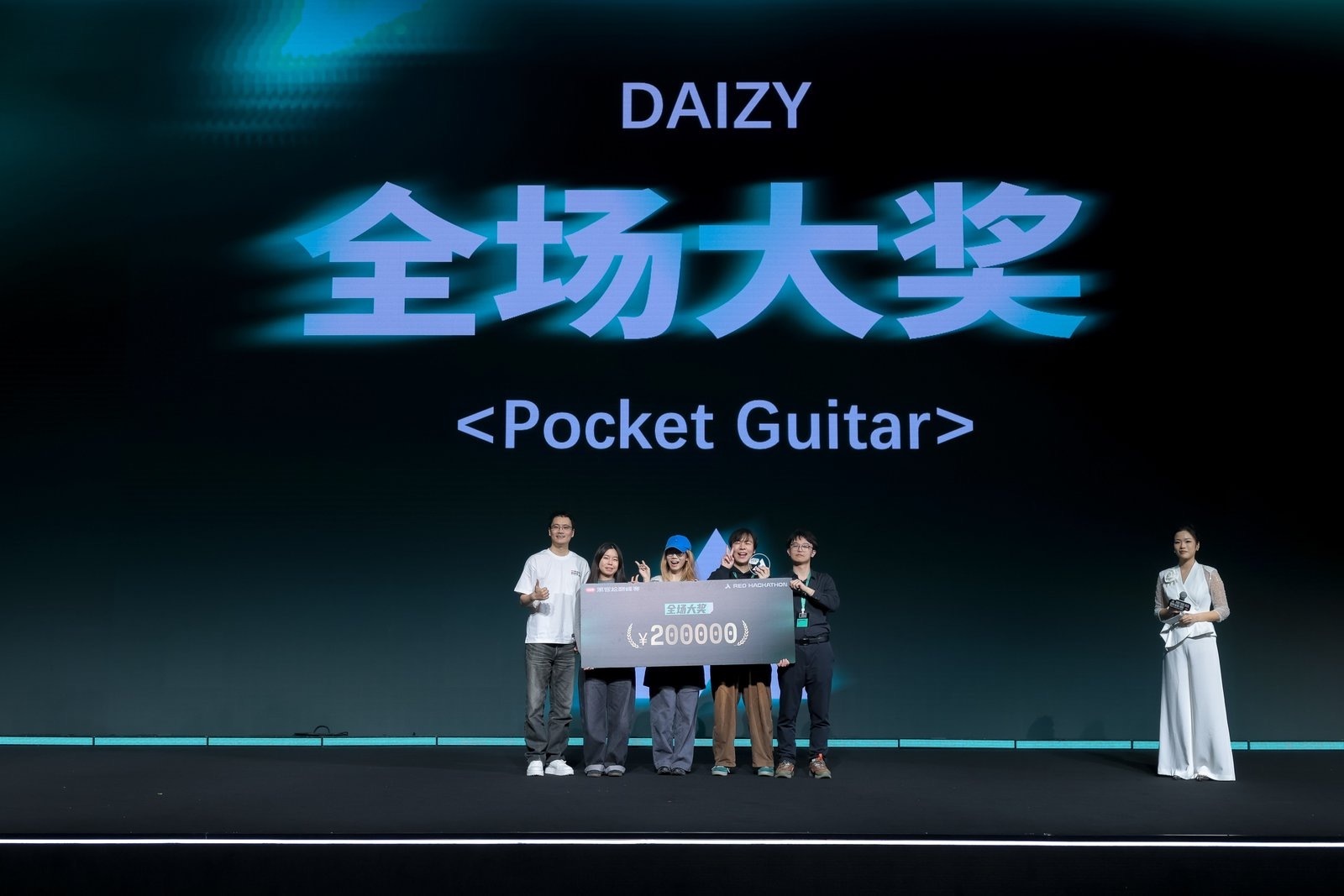 Portable card guitar smart hardware, won the grand prize
However, from the perspective of the people-goods-field logic, Xiaohongshu may still need to iterate on two aspects to build the right environment.
First, technology is a high-threshold category, and most of Xiaohongshu’s users cannot engage in serious tech discussions. Discussions that are overly professional or geared towards B-end applications may struggle to gain traction on Xiaohongshu.
Thus, entrepreneurs looking for useful feedback on their startups within the community need to possess strong communication skills, an understanding of user emotions, and the ability to navigate content flow logic, even needing to create a personal brand. The aforementioned entrepreneur was able to generate significant user feedback and successfully launch their project because they tapped into the community’s flow mechanism and the needs of the general user base.
Second, due to Xiaohongshu’s user demographics, some general tech or entertainment-related projects often gain high attention on the platform. For example, during this hackathon, a video featuring a combination of a two-dimensional headgear and mechanical arms became one of the hottest topics of the event due to its eye-catching effect. Additionally, the event focused on the new generation of AI creators, with over 60% of the finalists being from the “00s,” the youngest being only 12 years old, and the competition theme set as “48 hours to create a big toy for the world,” which inherently carries a topical nature.
However, an investor told 36Kr that while projects on Xiaohongshu hold certain reference value, finding suitable targets is currently challenging, with high screening costs. “Many ideas are interesting, but they are entertainment-heavy and difficult to commercialize.”
For a young community, Xiaohongshu’s tech category has progressed rapidly, and it is well aware of its advantages. Today, the wave of vibe coding amplifies this advantage, as technology moves towards equality, allowing more people to touch programming, which creates opportunities for generalized user engagement and public discussions.
However, as Sanbing mentioned, while Xiaohongshu has a broad goal of becoming the best tech community, achieving this vision will take a long time. Creating a big toy for the world is just the beginning.
Comments
Discussion is powered by Giscus (GitHub Discussions). Add
repo,repoID,category, andcategoryIDunder[params.comments.giscus]inhugo.tomlusing the values from the Giscus setup tool.